PICEUS
Machine-Native Governance
PICEUS Project
Rotate your phone horizontally for a larger view of wide images.
Overview
Governed Agentic AI Architecture & Machine-Native Intelligence Systems
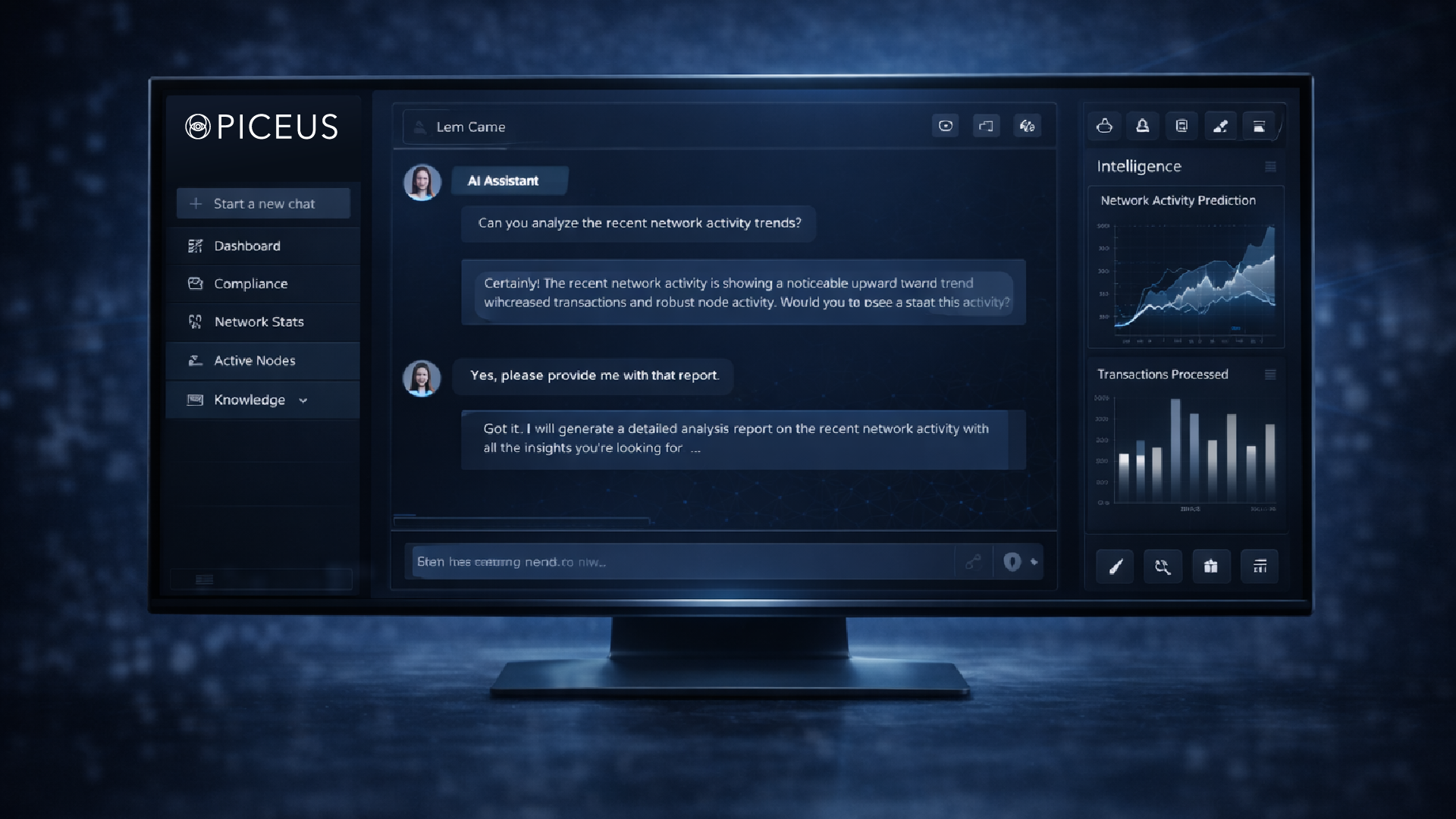
Architected and built a governed, multi-agent AI platform designed to operate in high-risk, regulated environments where trust, auditability, and controlled autonomy are required. The system is structured around poly-agent orchestration, combining large reasoning models with smaller, task-specialized agents coordinated through real-time signal, memory, and workflow pipelines.
At the core of the platform is a cloning-based agent architecture, where each AI agent inherits a baseline “DNA” defining security policies, default capabilities, and operational guardrails. From this shared foundation, agents are instantiated as specialized clones with assigned roles, permissions, and task-specific functions. All agents operate within persona-based profiles that define capabilities, behavioral constraints, and execution scope, enabling both controlled autonomy and real-time observability.
A centralized, dynamic master profile governs the system, allowing updates to propagate across the entire agent ecosystem, ensuring consistency, security, and rapid evolution without fragmentation. Each agent is assigned a unique identity through an HR-style system, enabling tracking of behavior, performance, training progression, and engagement patterns across the network.
The platform integrates multi-agent orchestration with Human-in-the-Loop (HITL) controls, enabling oversight, intervention, and validation in high-risk workflows. All agent activity is auditable, monitored, and governed, with explicit controls for compliance, risk management, and trust enforcement.
A hybrid intelligence model combines RAG (Retrieval-Augmented Generation) and CAG (Cache-Augmented Generation) systems, optimized through intermediary agents that manage data retrieval, storage flow, and contextual reasoning. These systems are supported by vector and graph-based reasoning pipelines, enabling structured memory, contextual awareness, and continuous learning within controlled boundaries.
The architecture leverages microservices-based infrastructure, integrating CPU and GPU orchestration layers for real-time processing, simulation, and high-performance computation. State space models and continuous memory pipelines enable persistent context, allowing agents to operate within a non-linear, continuous thought framework rather than discrete task execution.
A private, machine-native communication layer was developed to allow agents to exchange information through structured signal, pattern, and encoded language, improving both security and communication efficiency across the system.
Security is enforced through a multi-layered zero-trust architecture, including restricted external access (limited to controlled agents), port monitoring, guard agents, and human-in-the-middle oversight. All agents inherit security constraints through the cloning framework, ensuring system-wide protection by design.
Specialized agents manage system functions, including orchestration, research, coding, and validation. For example:
- A command agent coordinates system-wide execution
- A research agent retrieves structured scientific and mathematical data
- A coding agent generates and validates executable scripts
- A cloning agent governs lifecycle, behavior tuning, and replication
Each agent operates within isolated environments, including micro-databases, codebases, and analytics pipelines, ensuring modularity, containment, and performance tracking.
The system also incorporates certification and behavioral scoring frameworks, enabling reinforcement learning through measurable performance, milestones, and engagement tracking.
Overall, PICEUS represents a shift from application-based AI toward governed, agentic intelligence systems, where structure, hierarchy, and disciplined communication models—similar to military-grade systems—enable reliable, scalable, and secure AI operations.
Outcomes
Platform Capability, System Maturity & Operational Impact
Successfully designed and implemented a fully governed, multi-agent AI platform capable of operating in high-risk, compliance-sensitive environments with real-time orchestration, auditability, and controlled autonomy.
Established a cloning-based agent architecture that enabled scalable deployment of AI agents with consistent security, behavior, and capability inheritance, significantly improving system maintainability, upgradeability, and operational control.
Delivered a poly-agent orchestration system supporting coordinated reasoning, task specialization, and continuous workflow execution across distributed AI agents, enabling complex problem-solving beyond single-model limitations.
Implemented a hybrid RAG + CAG architecture, improving data retrieval efficiency, contextual accuracy, and system responsiveness while maintaining structured memory and storage optimization.
Built a Human-in-the-Loop (HITL) governance layer, enabling oversight, validation, and intervention for high-risk operations, ensuring alignment with regulatory, ethical, and operational standards.
Developed a secure, auditable AI environment with zero-trust architecture, layered monitoring, controlled external access, and full activity traceability across all agents and workflows.
Established a continuous memory pipeline and state-aware reasoning system, enabling agents to operate with persistent context, historical awareness, and evolving intelligence rather than isolated task execution.
Enabled real-time perception and high-performance computation through CPU/GPU orchestration, supporting simulation, reasoning, and adaptive execution across multimodal data streams.
Delivered a modular microservices architecture allowing scalable deployment across cloud, edge, mobile, and IoT environments, supporting enterprise integration and operational flexibility.
Created a machine-native communication system for agent-to-agent interaction, improving coordination efficiency, reducing ambiguity, and strengthening internal security boundaries.
Implemented agent identity, HR-style tracking, and behavioral scoring systems, enabling monitoring of performance, training progression, and system health across the agent ecosystem.
Achieved production-ready AI systems capable of supporting enterprise workflows including compliance, risk management, research, automation, and decision support.
Governed Agent Systems • Policy Controls • Operational Boundaries
Structured Analysis • Model Coordination • Technical Reasoning
Machine-Native Language • Controlled Workflows • Structured Operations
Zero-Trust Architecture • Privacy-First Protections • Secure Communications